

Soil Science & PQNK System
Beyond the Timeline: Re-framing the Transition to Regenerative Agriculture Through the Lens of Soil Life
Challenges the common '3 to 5 year transition' claim in regenerative farming, arguing that soil biology responds to correct conditions within hours, and that a farmer should track functional benchmarks like inundation resistance rather than counting calendar years.
Abstract
This paper directly challenges the common regenerative-farming axiom that a system takes three to five years to establish, arguing the framing is well-intentioned but fundamentally misleading because it portrays soil as an inert substance that slowly improves, which the paper says can lead farmers to misdiagnose an early struggling crop as simply 'too young' and default back to input-based fixes.
In its place, the paper offers what it calls the Yogurt Principle: like fermentation starting almost immediately once sterile milk reaches the right temperature with a starter culture, soil biology responds to the right conditions, ending tillage, stopping biocidal chemicals, and providing a carbon source, within hours, not years. It cites bacteria and archaea doubling their populations within hours, fungal mycelium expanding geometrically across a field within days given food and oxygen, and protozoa and nematodes proliferating on comparably short cycles to prey on the resulting bacterial and fungal blooms.
Given that colonization is near-instantaneous, the paper reframes the real question from 'how old is the system' to 'is the system functioning yet,' identifying three specific functional benchmarks that do take longer to mature: the fungal bridge (mycorrhizal networks for phosphorus and zinc exchange, slower to establish than bacterial populations), humus formation (a complex, multi-step biological sequence that builds structure and cation exchange capacity), and legacy issues (prior compaction, chemical residue, or biodiversity loss that create temporary bottlenecks).
The paper names resistance to inundation as the single most reliable functional benchmark: a soil lacking stable aggregates and microbial glues like glomalin compacts easily and becomes an anaerobic, root-suffocating slurry when saturated, while a functionally mature soil, built from fungal-bound aggregate structure and a full macropore/micropore network, acts like a sponge that absorbs heavy rainfall and drains to a well-aerated state, meaning the operative farmer question becomes how quickly the soil absorbs a heavy rain and returns to aeration, not how many years have passed.
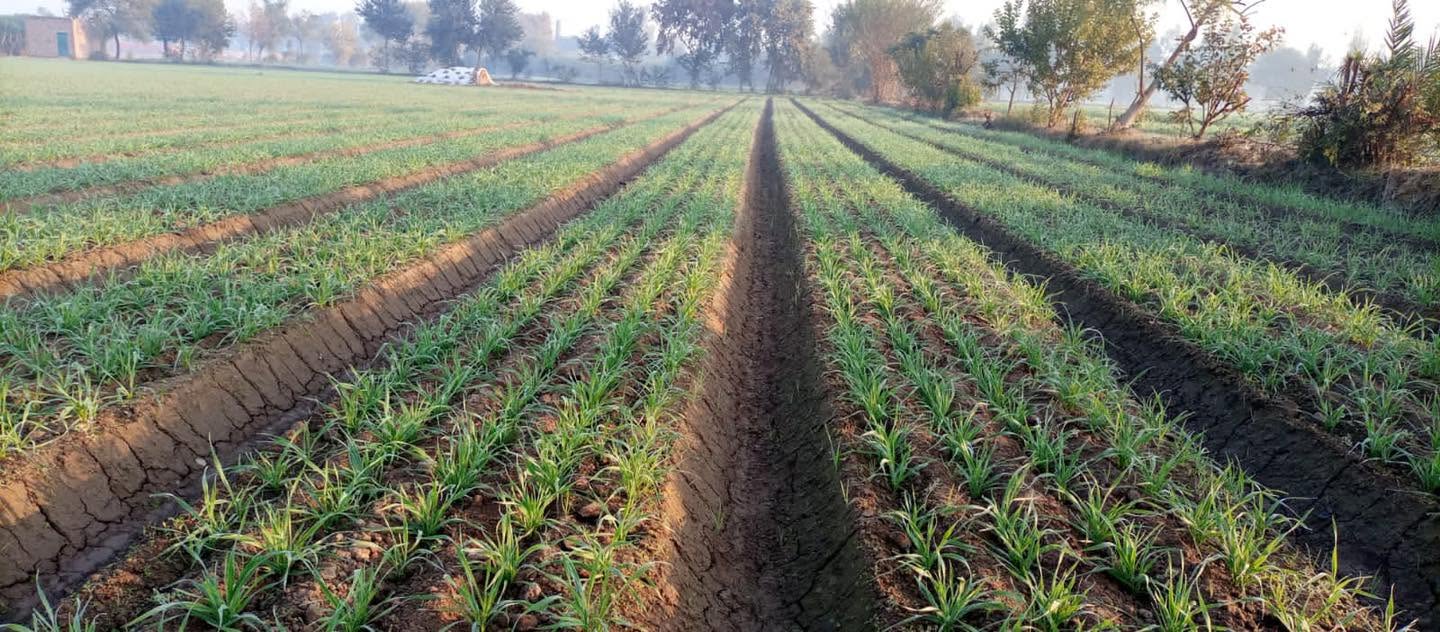
It closes with a six-step, non-sequential PQNK blueprint for creating these conditions immediately, breaking the hardpan, forming permanent raised beds, cultivating diverse cover crops with roots left undisturbed at termination, applying thick organic mulch (holding soil in a 13-26°C band), committing to no-till planting, and eliminating external inputs from day one, illustrated with a waterlogged-okra case study where the diagnosis is oxygen starvation from underdeveloped soil structure rather than plant age or nutrient deficiency, and where a foliar boron-zinc spray is reframed as a diagnostic/bridging tool rather than a default fix.
About This Paper
- Crop
- Okra
- Problem
- Waterlogging · Farmer Uncertainty / Diagnostic Skill Gap · Nutrient Deficiency Symptoms (Plant-Visible) · Poor Flowering / Fruit Set
- Science
- Soil · Transition · Plants
- Evidence
- Philosophical/Framework Argument
- Authority
- Current / Approved PQNK Knowledge
Related PQNK Science
Key Takeaways
- Challenges the standard '3-5 year transition' claim in regenerative agriculture as misleading; soil biology (bacteria/archaea doubling in hours, fungal mycelium expanding within days) responds to correct conditions almost immediately.
- Reframes the diagnostic question from 'how old is the system' to 'is the system functioning yet,' with three specific maturation benchmarks: fungal bridge establishment, humus formation, and legacy compaction/chemical issues.
- Names resistance to inundation, how quickly soil absorbs heavy rain and drains to an aerated state, as the single most reliable functional benchmark of a transitioning system.
- Offers a six-step, non-sequential blueprint for immediate ecosystem function: break hardpan, form raised beds, cultivate cover crops with roots left in place, apply thick mulch (13-26°C soil temperature band), commit to no-till, and eliminate external inputs from day one.
- Case study reframes a common failure (waterlogged okra with no fruit set) as an oxygen-starvation/structure problem rather than system age or nutrient deficiency, with foliar boron-zinc treated as a diagnostic bridge, not a default fix.
Related Knowledge
same problem
A Farmer's Guide to Establishing a Prosperous Olive Orchard
A practical planting guide for olive growers in Mediterranean-equivalent climates, laying out two distinct PQNK establishment paths, high-density irrigated beds versus a low-cost curved-furrow-and-borehole system for rain-fed sloping land, plus a year-by-year yield projection showing how consistent soil biology breaks the crop's typical biennial-bearing cycle.
same problem
The Hydrological Transformation of Agricultural Landscapes Through the Paedar Qudratti Nizam Kashatqari (PQNK) System
PQNK-prepared fields are documented absorbing rainfall events of 600mm in a day without runoff, a figure the paper says farmers initially found impossible to believe. It explains the soil physics behind that claim, from macroporosity gains to deep-rooted 'biological drills,' and positions PQNK farms as recharge basins rather than flood risks.
same problem
Managing Soil Electrical Conductivity & Redox Potential in a Pristine, No-Chemical System for Optimal Nutrient Uptake
This paper reframes two conventionally input-driving soil metrics, electrical conductivity and redox potential, as emergent properties of root-microbe communication rather than parameters to correct with salts or drainage, and lays out what a PQNK farmer should, and should not, do in response to them.
same problem
PQNK Knowledge Paper: The Origin of Plant Mass and the Role of the Soil System
Countering the assumption that plants are built from soil nutrients, this paper traces a plant's physical bulk to photosynthesis, condensed carbon dioxide and water, and reframes soil minerals, typically just 1-10% of a plant's dry matter, as catalysts a restored microbial community makes available rather than bulk the farmer must supply.