

Crop-Specific Guides
Soil Strategy for Citrus in Yellow Sand Dunes
A short practical guide for establishing Kinnow and other citrus on loose, low-fertility yellow sand dunes, using a cover-crop mix, mulch, and microbial inputs to build a living root zone in ground that would otherwise drain water too quickly to support the orchard.
Abstract
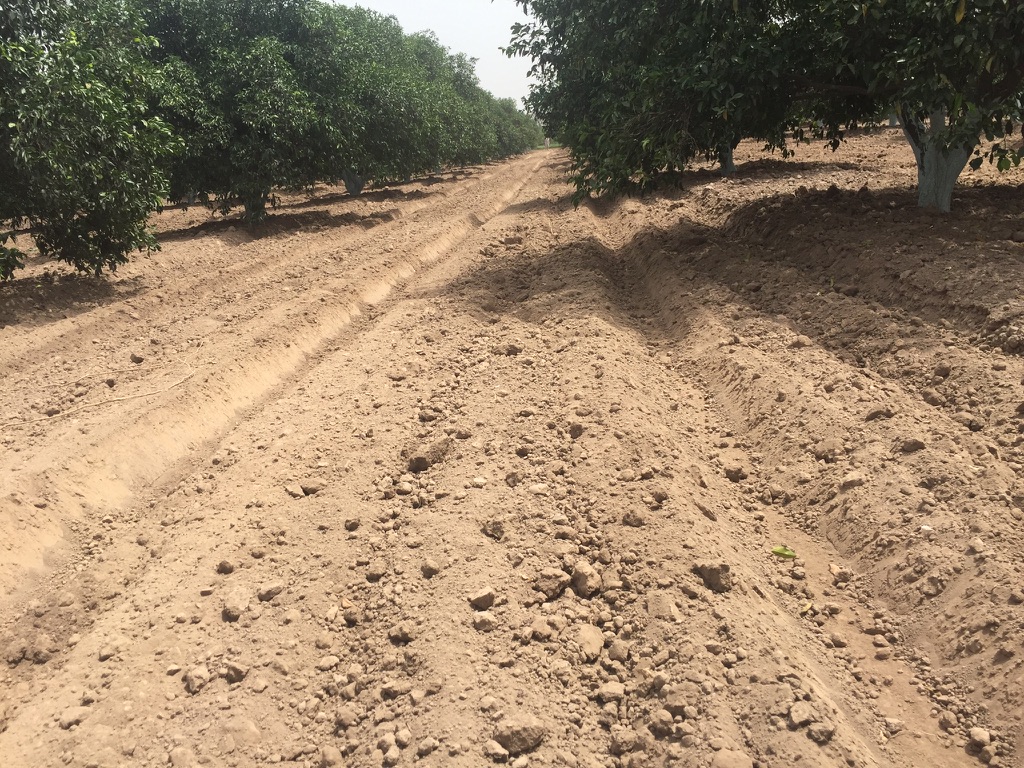
Yellow sand dunes present a specific establishment problem for citrus: the soil is loose, low in fertility, and drains water quickly, so trees can be planted into it but cannot be expected to thrive without first reworking the soil itself. This guide sets out a compact sequence of practical steps to convert yellow sand into a productive growing base for citrus using cover plants, mulch, and microbial inputs rather than manufactured soil amendments.
The core intervention is building a living root system in the top 4 feet of soil by growing a mix of Crowfoot Grass, Sunhemp, and Jantar together, chosen so their fibrous and taproot combinations bind the sandy profile, reduce erosion, and open bio-pores for air and water movement. As these companion roots develop they also activate microbial activity in the soil, which the guide treats as the mechanism that converts a structurally weak sand dune into a fertility-building system rather than a passive growing medium.
Surface management follows the same living-soil logic: mulching with dry grass, sugarcane waste, or leaves is used to preserve moisture and regulate soil temperature, existing drip irrigation is run deeper and less frequently to keep the upper root zone active without overwatering the free-draining sand, and compost tea or vermiwash is sprayed every 15 to 20 days to sustain microbial health through the establishment period. Rock phosphate or other natural minerals are offered as an optional addition during the citrus tree's early growth phase.
The guide is deliberately narrow in scope, a field-ready checklist rather than a full orchard management plan, and is published bilingually in English and Urdu for direct use by growers converting yellow sand ground into citrus (Kinnow) production.
About This Paper
- Crop
- Citrus (Kinnow)
- Problem
- Sandy / Low-Fertility Soil Texture · Fast / Uneven Water Drainage · Soil Erosion
- Science
- Soil · Water · Biodiversity
- Evidence
- Demonstration
- Authority
- Current / Approved PQNK Knowledge
Related PQNK Science
Key Takeaways
- Target zone for soil rebuilding is the top 4 feet of yellow sand, built around a companion mix of Crowfoot Grass, Sunhemp, and Jantar.
- Fibrous and taproot combinations from the cover-crop mix bind loose sand, cut erosion, and create bio-pores for water and air movement.
- Mulch (dry grass, sugarcane waste, or leaves) is used specifically to preserve moisture and regulate soil temperature in the free-draining sand.
- Existing drip irrigation should be run deeper and less frequently rather than shallow and frequent, to keep the upper root zone biologically active.
- Compost tea or vermiwash is sprayed every 15-20 days to sustain microbial health during establishment; rock phosphate or natural minerals are an optional early-growth addition.
Related Crops
Related Knowledge
same problem
Agriculture in Sandy Soil: A PQNK Lecture Transcript
A transcribed lecture explaining why sandy soils fail to retain water and nutrients, and demonstrating, with live experiments, the PQNK clay-slurry treatment that seals the upper root zone of a raised bed so sandy soil can hold moisture and support crops without imported topsoil.
same problem
Unlocking the Secrets of the Soil: Understanding Deep Topsoil and Nature's Partnership
Answering a farmer's questions about topsoil and the plant-air-soil nutrient split, this paper explains how PQNK builds 'deep topsoil' many inches below the surface through a plant-microbe carbon pump, and unpacks why nature evolved a system where over 95% of a plant's mass comes from air and water while a mere 0.083% mineral fraction from soil governs everything.
same problem
The Weeds as Soil Physicians: A PQNK Diagnostic Guide to Soil Health in the Punjab Region
This regional diagnostic guide teaches Punjab farmers to read specific weed combinations, not single species, as a whole-field soil diagnosis, then prescribes a 'principle of substitution': replacing each wild pioneer weed with a cultivated crop that performs the identical remediation function while also producing a yield.
same problem
PQNK Farming in Practice: Site-Specific Solutions for Regenerative Agriculture — Questions & Detailed Answers
A practitioner's detailed field questions, on bed orientation, irrigation choice, land clearing, machine-hour budgets, and mulch selection, are answered directly, with the recurring caveat that most PQNK decisions are inherently site-specific and only become concrete once a farm's topography, water, climate, and objectives have been surveyed.