
Soil Science & PQNK System
Composition of Black Soil: Natural Ways to Amend It Without Agrochemicals
Breaks down what actually makes black soil black, its typical mineral composition by percentage, and the four-step PQNK sequence for restoring its productivity without synthetic amendments.
Abstract
This paper explains black soil's characteristic dark color as the product of four overlapping factors: iron oxide (Fe2O3) and manganese oxide (MnO2) coating soil particles, the chemical weathering of dark, iron- and magnesium-rich volcanic basalt rock over time, the darkening effect of even small amounts of decomposed organic matter (humus), and a moisture-retention property that makes the soil appear darker still when wet.
A compositional breakdown is provided by approximate percentage: clay 40-60% (holds moisture, makes soil heavy), silt 20-30% (contributes to fertility), sand 10-20% (improves drainage), calcium carbonate 5-10% (alkaline, aids nutrient availability), magnesium carbonate 1-5% (supports plant metabolism), iron oxide trace-3% (gives dark color, aids photosynthesis), alumina 5-15% (involved in nutrient retention), and organic matter at a comparatively low 1-2%.
That low organic-matter figure is presented as the actual lever for improvement: black soil's mineral wealth (calcium, magnesium, iron, alumina) is already abundant, but its low humus content limits the biological activity needed to make those minerals available to crops.
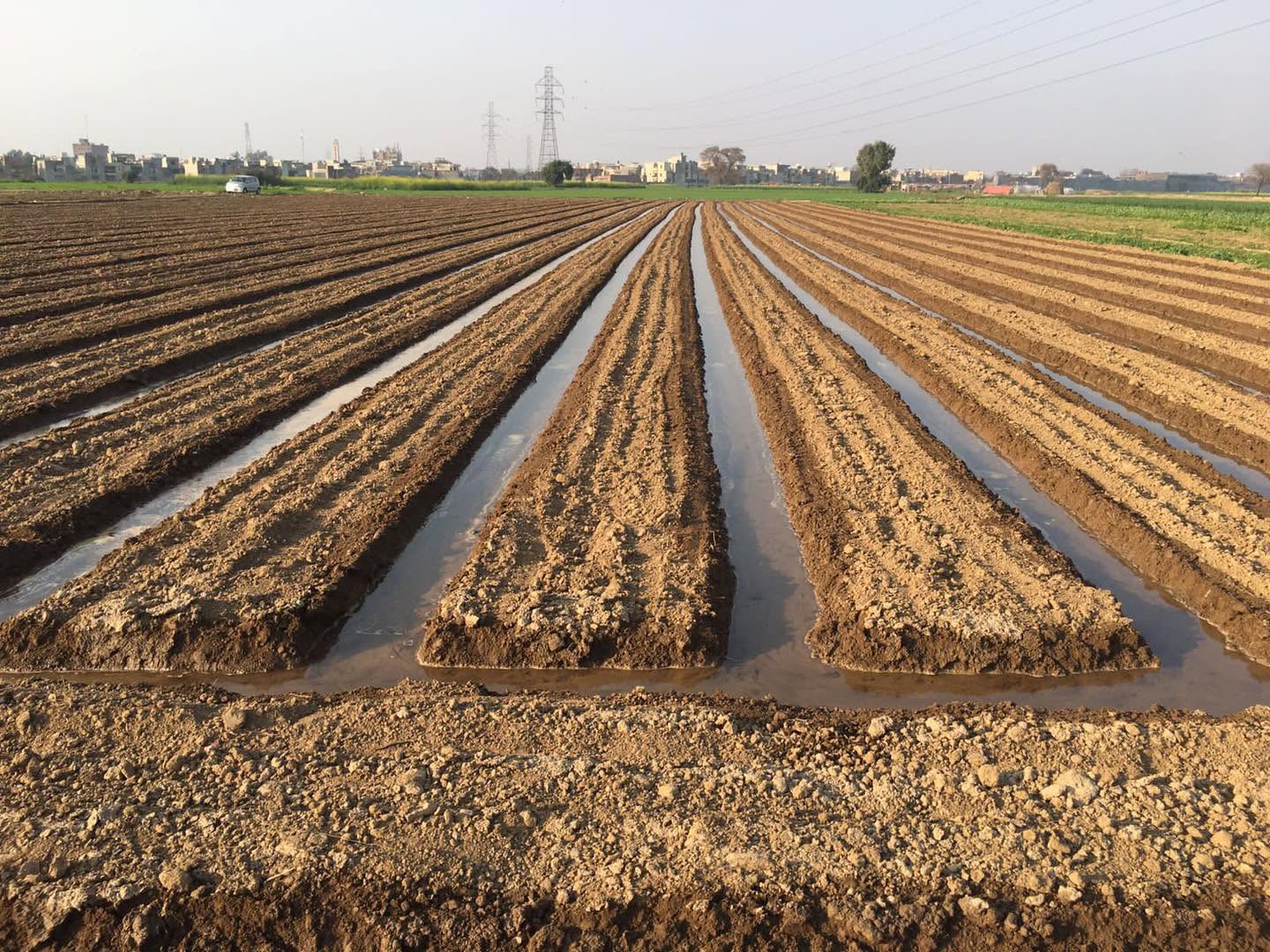
The paper closes with a four-step PQNK restoration sequence: prepare the field for irrigation, break the hardpan, form permanent raised beds, and restore the soil surface with cover-crop roots left in place and mulched, rather than relying on any purchased mineral or organic amendment.
About This Paper
- Problem
- General Soil Fertility / Land Degradation · Soil Organic Matter / Carbon Loss
- Science
- Soil
- Evidence
- Scientific Mechanism
- Authority
- Current / Approved PQNK Knowledge
Related PQNK Science
Key Takeaways
- Black soil's color comes from iron/manganese oxide coatings, weathered basalt minerals, trace humus, and moisture film on clay particles, not from a single source.
- Typical composition: clay 40-60%, silt 20-30%, sand 10-20%, calcium carbonate 5-10%, alumina 5-15%, with organic matter comparatively low at just 1-2%.
- The soil's mineral wealth (calcium, magnesium, iron, alumina) is already abundant; low organic matter, not mineral scarcity, is what limits its biological availability to crops.
- PQNK restoration is a four-step sequence: prepare for irrigation, break the hardpan, form permanent raised beds, and restore cover with mulched, undisturbed cover-crop roots.
Related Crops
Related Knowledge
same problem
PQNK: The Wholesale Four-Step System to Reconnect the Water Cycle and End Water Scarcity
Iran's collapsing rivers, sinking cities, and vanishing aquifers are presented as a preview of what awaits any nation that keeps farming on hardpan-sealed, bare soil. This paper argues the crisis is not a rainfall shortage but a blocked water cycle, and lays out PQNK's four-step protocol for reopening it.
same problem
The Global Cost of Agricultural Degradation & the PQNK Restoration Dividend
A systems-level policy brief, addressed to bodies including the FAO, World Bank, and IMF, that quantifies degenerative agriculture's hidden annual cost at $1.9 trillion and argues PQNK is the only complete-systems alternative capable of converting that loss into an estimated $4.7 trillion annual global 'Restoration Dividend.'
same problem
Factsheet: Commercial Bamboo Plantation Under PQNK
Bamboo behaves as a 'soil engine' under PQNK: a no-till, hardpan-broken planting of 726 plants per acre that needs no synthetic inputs, sequesters carbon, and stays productive for 60-100 years once established. This factsheet lays out species selection, the four-phase establishment protocol, and the water, nutrient, and weed management rules that keep the system self-sustaining.
same problem
The Healer's Dialogue: From Weed Signal to Soil Silence — A PQNK Pathway to Self-Regulating Abundance
Responding to a farmer's question about using weeds as nutrient-deficiency indicators, this dialogue explains that in PQNK the goal isn't to manage weeds as permanent indicator crops, but to run a four-step protocol that resolves the soil problems they signal so the weeds voluntarily depart.