
Plant Physiology & Production Systems
Open Field Vertical Farming Under PQNK: Stacking Biology Instead of Expanding Land
Translates a field lecture into a structured framework for growing tunnel-style vining crops in open fields without tunnels, greenhouses, or chemical inputs, arguing that vertical canopy management and time-based crop replacement can turn one acre into a resilient, year-round livelihood unit.
Abstract
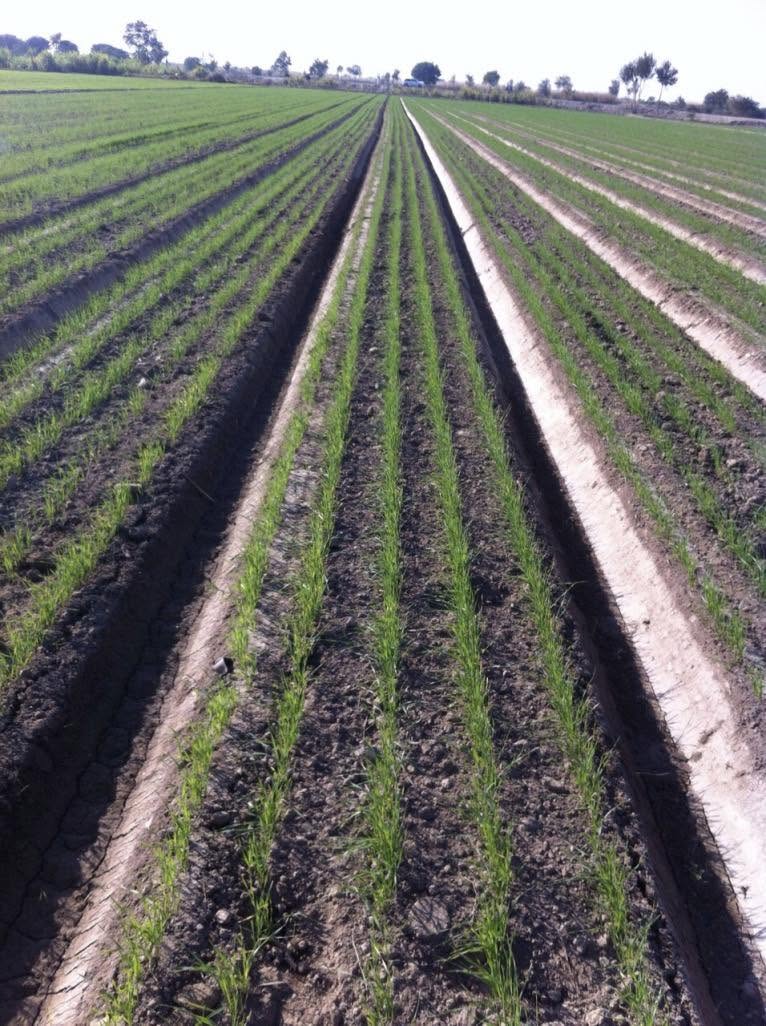
The paper reframes vertical farming as a space-utilization technique rather than a tunnel-dependent technology. Tunnels, it notes, exist primarily to protect crops through 5 to 7 weeks of extreme cold and cost PKR 8 to 10 lakh per acre to build, while remaining maintenance-heavy and input-dependent; the same spacing, canopy management, and plant training used inside tunnels, it argues, can be applied in open fields without ever building one.
Vertical farming under PQNK is presented as integrating directly into the PQNK One-Acre Prosperity Model for small landholders, tenant farmers, and household-scale producers, where the objective is continuous income, household food security, low risk, and low cost rather than maximum yield of a single crop. Before any vertical system can succeed, the paper insists on four non-negotiable conversion steps: breaking the hardpan through deep subsoiling, one deep detoxifying irrigation to wash accumulated salts and reset soil chemistry, forming permanent raised beds that are never disturbed again, and retaining roots and biomass as mulch under a no-till regime.
The core production model layers three biological zones: an upper layer of vines and climbers (gourds, melon, cucumber, watermelon, tomato, beans) trained vertically on bamboo, rope, or trellis; a middle layer of bush crops such as brinjal, chilli, okra, and peas; and a lower layer of soil-covering crops, mulch, and living roots. Summer and winter crops are deliberately overlapped, with summer vines shading winter crops and winter crops in turn protecting soil from cold, described as biological climate buffering that replaces artificial climate control. Crop replacements are established weeks before the outgoing crop's life cycle ends, so income never gaps.
The paper also foregrounds two often-overlooked operational factors: household nutrition before market sale, arguing one kanal of vertical production is sufficient for a household's full vegetable and fruit needs excluding grains, and operator skill, arguing that the tractor operator is the most critical person on the farm and that a farmer who does not personally operate machinery, control seeding depth, and set spacing is a manager rather than a farmer.
It closes by integrating the vertical cropping system with ducks for insect control, small ruminants, cattle for biomass recycling, and fish ponds where feasible, framing the farm as a closed, resilient ecosystem whose year-round income and low production cost solve poverty at the production level rather than through subsidy.
About This Paper
- Crop
- Gourds (crop group) · Melon · Cucumber · Watermelon · Tomato · Brinjal (Eggplant) · Chilli · Okra · Pea
- Problem
- High Input / Production Cost · Price Volatility / Market Glut · Farmer Income Instability / Debt · Diet-Related Health / Food Security Concern
- Science
- Production Architecture · Climate · Economics
- Evidence
- Philosophical/Framework Argument
- Authority
- Current / Approved PQNK Knowledge
Related PQNK Science
Key Takeaways
- Frames vertical farming as a pure space-utilization technique, arguing the same spacing and canopy management used in tunnels transfers directly to open fields without tunnel construction.
- Quantifies the tunnel-farming alternative it is replacing: tunnels cost PKR 8 to 10 lakh per acre and exist mainly to cover a 5 to 7 week cold window, outside of which crops function in open conditions anyway.
- Specifies four mandatory, sequential ACI-to-PQNK conversion steps before vertical cropping can work: breaking the hardpan, one deep detox irrigation, permanent raised beds, and no-till mulch retention.
- Lays out a three-layer canopy strategy (vertical vines, mid-height bush crops, ground-covering lower layer) plus deliberate summer/winter crop overlap for biological climate buffering.
- Uses time-based crop replacement, planting the next crop weeks before the current one ends, to eliminate income gaps between harvests.
- Argues one kanal of vertical production can meet a household's full vegetable and fruit needs (excluding grains), prioritizing food security ahead of commercial surplus.
Related Knowledge
same crop
The PQNK Kitchen Garden: A Regenerative Ecosystem for Household Abundance and Sovereignty
A compact guidebook applying PQNK principles to household-scale food production, showing how a single 4-foot by 20-foot bed, planned like a household budget around daily, weekly, and seasonal produce needs, can supply the bulk of fresh vegetables for a family of ten, with a parallel rooftop/container method built around a novel underground 'soil life conduit.'
same problem
Transforming Pakistan's Sugar Industry Through the PQNK (Pristine Organic Farming) System
Pakistan's sugar sector runs on a decades-old cycle of farmer exploitation, long-haul cane transport, and volatile supply. This paper proposes concentrating high-yield PQNK sugarcane cultivation within a 10-15 km radius of each mill, and models the profit, sugar-recovery, and crushing-season gains that follow.
same crop
Channeling Plant Energy: A PQNK Guide to Managing Vegetative Growth for Regenerative Production
With no grazing animals left to signal plants that their surplus foliage is being used, PQNK farmers must manually replicate that missing pressure. This guide sets out four directives, stamping, grazing, pruning and pinching, and bruising, with a crop-by-crop protocol for redirecting a plant's vegetative surplus into reproductive yield.
same problem
Sugarcane: The Bamboo Principle
Sugarcane is conventionally treated like wheat, sown, harvested, and replanted every few years, but this paper argues it is biologically identical to bamboo: a rhizome-forming perennial that gets stronger, not weaker, with repeated selective harvesting. It lays out the wide-spacing planting geometry and selective-cut discipline behind PQNK yields of 80-120 tonnes per acre over an 8-10-plus year plantation life.