

Water & Climate
The Greatest Climate Solution Is Not More Trees: It Is Changing How We Farm
A PQNK knowledge paper arguing that because crop photosynthesis is biochemically identical to forest photosynthesis, agricultural soil management, not tree planting, is the larger lever for national carbon storage, backed by published meta-analyses on tillage and cover cropping.
PQNK Review Status — this paper contains one or more statements currently under Pedaver/PQNK review. It remains available as part of the Knowledge Library, but flagged statements should not be treated as current authoritative PQNK doctrine until review is complete.
Abstract
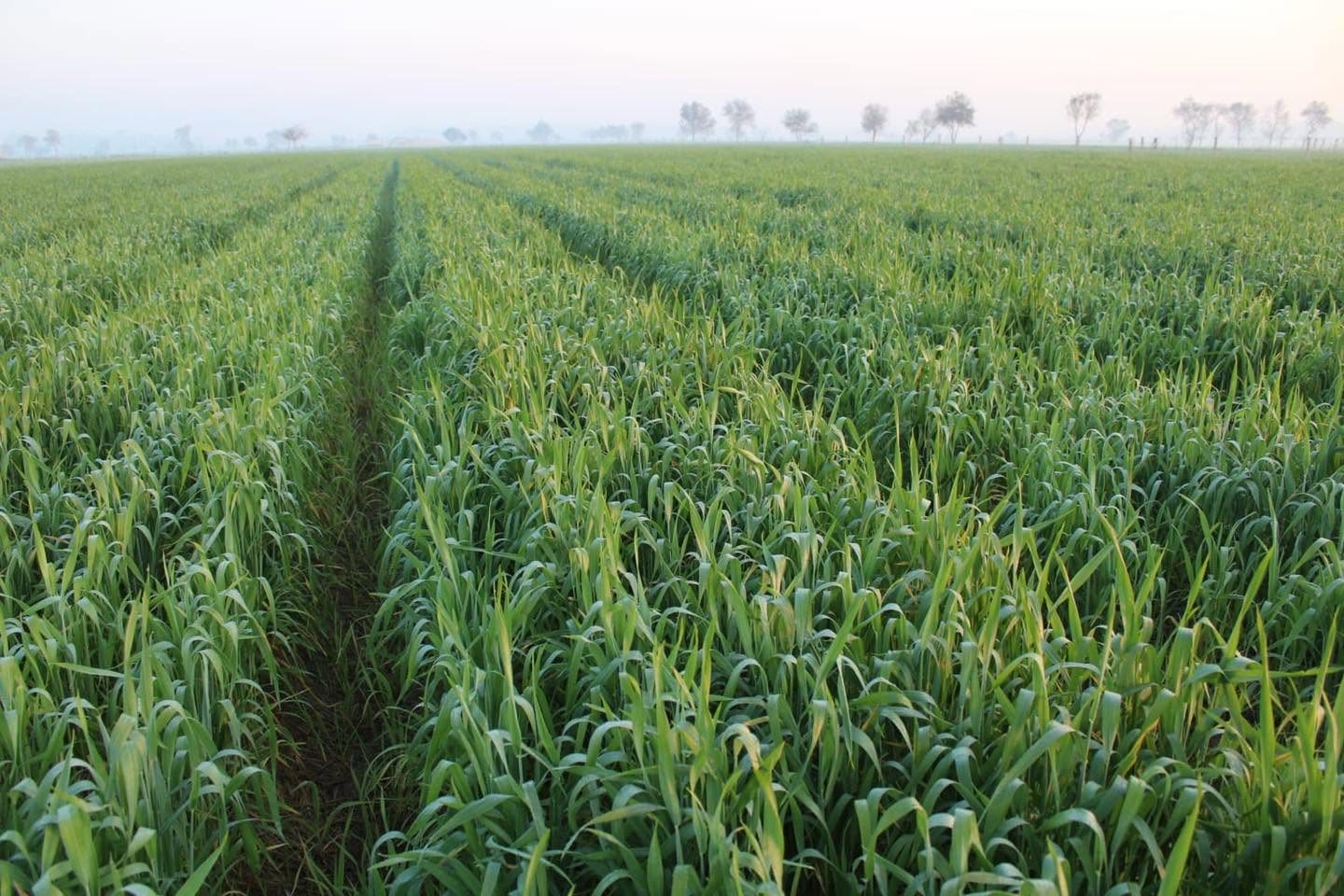
The paper opens from Pakistan's own record, the Khyber Pakhtunkhwa Billion Tree Tsunami programme, which planted over a billion trees, restored roughly 350,000 hectares, and became the first Bonn Challenge pledge to reach its restoration goal, to ask a pointed question: what is the value of planting millions of trees while hundreds of millions of agricultural acres continue losing soil carbon every year? Its answer is that every green plant, wheat, maize, or forest tree, runs the identical photosynthetic algorithm, so the atmosphere draws no distinction between crop carbon and tree carbon; the difference lies entirely in soil management after the plant grows.
Citing global meta-analyses, the paper makes a precise and less convenient claim than 'stop tilling': switching an already-cultivated field to no-till alone does not reliably rebuild lost soil carbon (Luo, Wang, & Sun, 2010), while pairing undisturbed soil with permanent living cover drives measurable gains, cover-cropped no-till systems show soil organic carbon gains averaging around 7 percent over bare or thinly covered comparators (Joshi et al., 2023). The lesson drawn is that undisturbed soil and continuous living cover must operate together, exactly the combination a forest floor provides by default and a farm only achieves by deliberate design.
On national scale, the paper cites World Bank data putting Pakistan's agricultural land at roughly 47 percent of total area (close to 37 million hectares) against forest cover under 5 percent, roughly one-tenth as much, arguing that even modest per-acre soil carbon gains across cultivated land represent a national carbon reservoir several times larger than anything achievable through forestry alone, without removing land from food production.
The paper is explicit that it is not arguing against tree planting, forests remain indispensable for biodiversity and watershed stability, but against treating tree planting as the only meaningful land-based climate lever. It proposes reframing national climate metrics away from a simple count of trees planted toward measures of how many agricultural acres stopped being disturbed, how much soil carbon increased, how much rainfall infiltrated, and how much irrigation water and production cost were saved.
About This Paper
- Crop
- Wheat · Maize (Corn)
- Problem
- Soil Organic Matter / Carbon Loss · Poor Water Infiltration
- Science
- Climate · Soil · Economics
- Evidence
- External Scientific Evidence
- Authority
- Requires PQNK Review
Related PQNK Science
Key Takeaways
- Photosynthesis is biochemically identical in a wheat leaf and a forest leaf; Pakistan's Billion Tree Tsunami restored roughly 350,000 hectares, yet hundreds of millions of agricultural acres continue losing soil carbon in parallel.
- A global meta-analysis found that switching to no-till alone does not reliably rebuild lost soil carbon (Luo, Wang, & Sun, 2010); cover-cropped no-till systems show organic carbon gains averaging around 7 percent over bare comparators (Joshi et al., 2023).
- Pakistan's agricultural land is roughly 47 percent of total area (about 37 million hectares) versus under 5 percent forest cover, making soil carbon in cropland a potentially larger national lever than tree planting alone.
- The paper's four PQNK principles, no disturbance, no inundation, permanent cover, maximum biodiversity, map directly onto the combination the cited literature associates with durable soil carbon gains.
- Higher soil organic matter is linked to better rainfall infiltration, lower irrigation demand, and greater drought resilience, benefits the paper frames as accruing to the farmer directly, not only as a government carbon metric.
- The paper proposes replacing simple trees-planted counts with metrics like acres brought under undisturbed management, soil carbon gained, rainfall infiltrated, and irrigation cost saved.
Related Knowledge
same problem
What Science Delivered: The Documented Balance Sheet of a Century of Input-Funded Agricultural Research
Prompted by an online dismissal of scientific consensus, this paper turns the same skepticism on a century of input-industry-funded agricultural research and totals its documented balance sheet across soil, water, climate, cost, yield, food quality, and smallholder viability, using named published sources throughout and flagging PQNK's own field data separately wherever it appears.
same problem
Earth to Food: Reclaiming Our Agricultural Future
A wide-ranging presentation tracing Earth's 400-million-year rock-to-dirt-to-soil-to-life cycle, diagnosing the 62 years since 1958 as a brief, damaging industrial experiment against that record, and closing with distinct, differentiated calls to action for farmers, food-chain actors, environmentalists, and consumers.
same problem
The Weeds as Soil Physicians: A PQNK Diagnostic Guide to Soil Health in the Punjab Region
This regional diagnostic guide teaches Punjab farmers to read specific weed combinations, not single species, as a whole-field soil diagnosis, then prescribes a 'principle of substitution': replacing each wild pioneer weed with a cultivated crop that performs the identical remediation function while also producing a yield.
same problem
Contour Line Farming through the PQNK (PICNIC) Lens
Large tracts of sloping, rainfed farmland already receive twice the water crops need, yet fail from runoff and erosion rather than drought. This paper applies PQNK's hardpan-breaking and mulch principles specifically to undulating terrain, using contour-aligned furrows as micro check-dams and citing practitioners who have farmed 7-8 consecutive years on rainfall alone.