
Soil Science & PQNK System
The Living Soil: Why Your Orchard Floor Is as Important as Your Trees
A citrus-orchard guide arguing that a permanent cover of living plants or dead mulch on the orchard floor, never bare sand, does more for tree health than the canopy itself, across four specific mechanisms.
Abstract
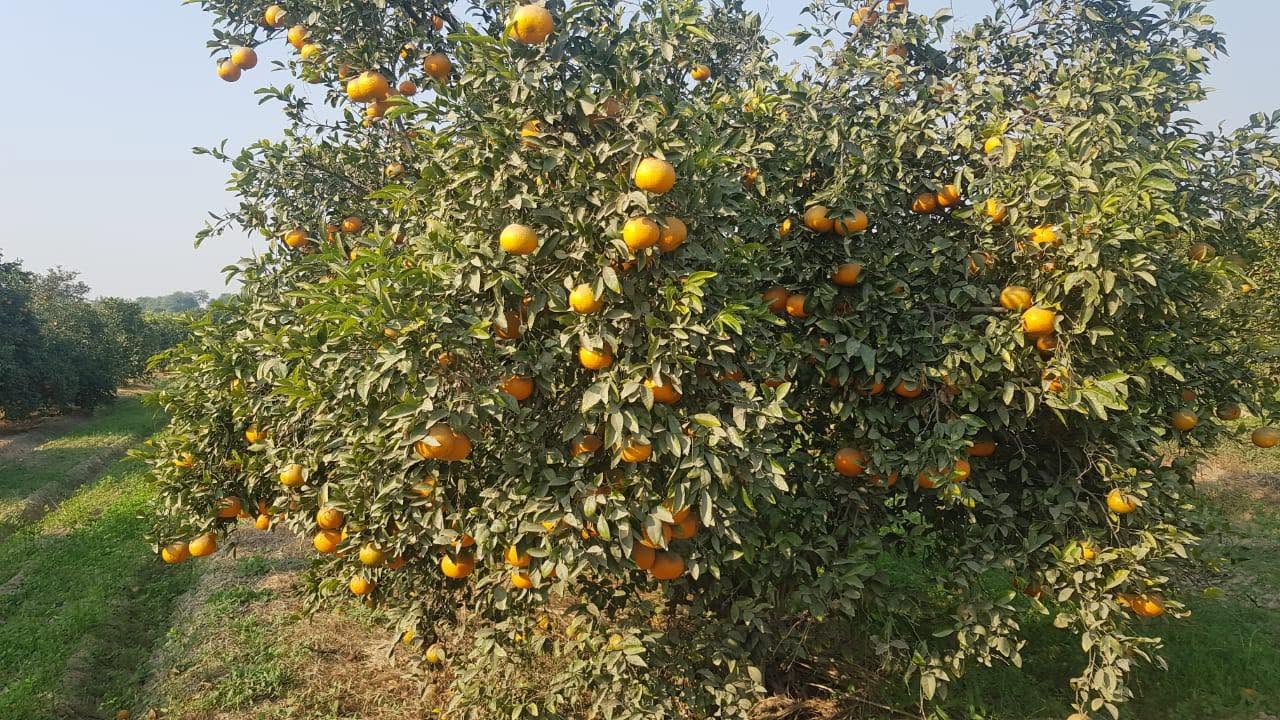
Aimed at citrus growers, this paper argues that the orchard floor, not the tree canopy, is the true engine of a thriving grove, and that leaving soil bare forfeits most of what a PQNK-managed orchard can provide. It organizes the case around four specific mechanisms tied to a permanent mulch or living cover.
The first mechanism is nutrient access: soil already holds the minerals trees need, locked in sand and mineral particles, and mulch is described as the food that 'wakes up' the microbes that unlock and deliver it to roots in balanced form; without mulch, this process simply does not start. The second is water harvesting: mulch acts as a sponge that catches morning dew and absorbs ambient humidity, providing a constant, gentle water supply that the paper says can dramatically reduce or even eliminate the need for drip irrigation.
The third mechanism is biological defense: mulch-covered soil hosts beneficial bacteria, including Bacillus thuringiensis, that act as resident bodyguards against pests and disease, a defense the paper positions as more durable than chemical spraying because it operates continuously from within the root zone. The fourth is thermal stability: bare sand swings from dangerously hot in sun to cold at night, stressing roots, while a mulch blanket keeps soil temperature stable and maintains the dark, moist, airy conditions roots need to grow strong, comparable to a natural forest floor.
The paper closes on what it calls the golden rule of PQNK orchard management: feed the soil, not the plant. Canopy shade is framed as a secondary bonus; the ground cover, whether living weeds and grasses or dead mulch, is described as the actual engine that supplies the tree's nutrients, water, and protection.
About This Paper
- Crop
- Citrus (Kinnow)
- Problem
- Bare / Exposed Soil · Cold / Frost Damage · General Pest Pressure · High Irrigation Cost / Dependency
- Science
- Soil · Water · Crop Protection
- Evidence
- Philosophical/Framework Argument
- Authority
- Current / Approved PQNK Knowledge
Related PQNK Science
Key Takeaways
- Four specific benefits flow from permanent orchard-floor cover: it activates microbial nutrient delivery, harvests atmospheric moisture like a sponge, hosts Bt bacteria as natural pest defense, and stabilizes root-zone temperature.
- Mulch's water-harvesting effect (absorbing dew and ambient humidity) can dramatically reduce or eliminate the need for drip irrigation in a citrus orchard.
- Bare sand allows dangerous temperature swings; mulch cover keeps soil in a stable, dark, moist, airy state comparable to a natural forest floor.
- The paper's central rule, 'feed the soil, not the plant,' treats canopy shade as a secondary bonus and ground cover as the true productive engine of the orchard.
- Soil should never be left bare; either a living cover (weeds/grasses) or dead mulch is required to unlock these benefits.
Related Knowledge
same problem
The PQNK Strawberry Production System: Achieving Commercial Abundance Through Ecosystem Logic
A full production system for open-field commercial strawberries under PQNK, covering ultra-high-density planting (19,600 plants/acre, nearly double the conventional standard), a mulch-hydration system that eliminates irrigation, a three-layer pest defense, and a post-harvest cold-chain protocol, plus a winter-crop rotation that keeps the same permanent bed productive year-round.
same problem
Soil Moisture Management in PQNK Organic Farming: The 30/70 Rule
Explains PQNK's core moisture condition, roughly 30% water-filled and 70% air-filled soil pore space, as the sustained balance of a healthy, functioning PQNK soil, and the yield, input-cost, and produce-quality consequences of over-irrigating past it.
same problem
Creating On-Farm "Micro-Water Cycles": Landscape Design to Maximize Rain, Dew, and Humidity Capture at the Microclimate Level
This foundational document argues that irrigation dependency is a design failure, not a water-supply problem, and backs the claim with per-crop data: PQNK sugarcane and rice show an 88-93% reduction in externally supplied irrigation water compared to conventional production. It lays out the landscape design, contour work, and mulch management that let a farm meet its own water needs from rainfall, dew, and humidity alone.
same problem
A Knowledge Paper on Citrus Flowering and Fruiting Within the PQNK Ecosystem
Citrus flowers are bisexual and fully self-pollinating, meaning every bloom is a potential fruit, so this paper argues that flower drop is not natural sexual sorting but a stress response, and that the single most damaging intervention a farmer can make in a mature PQNK bed is watering it.