

Published July 25, 2026
The PQNK Raised Bed System: Engineering Optimal Root Zone Environments for Vigorous Plant Production
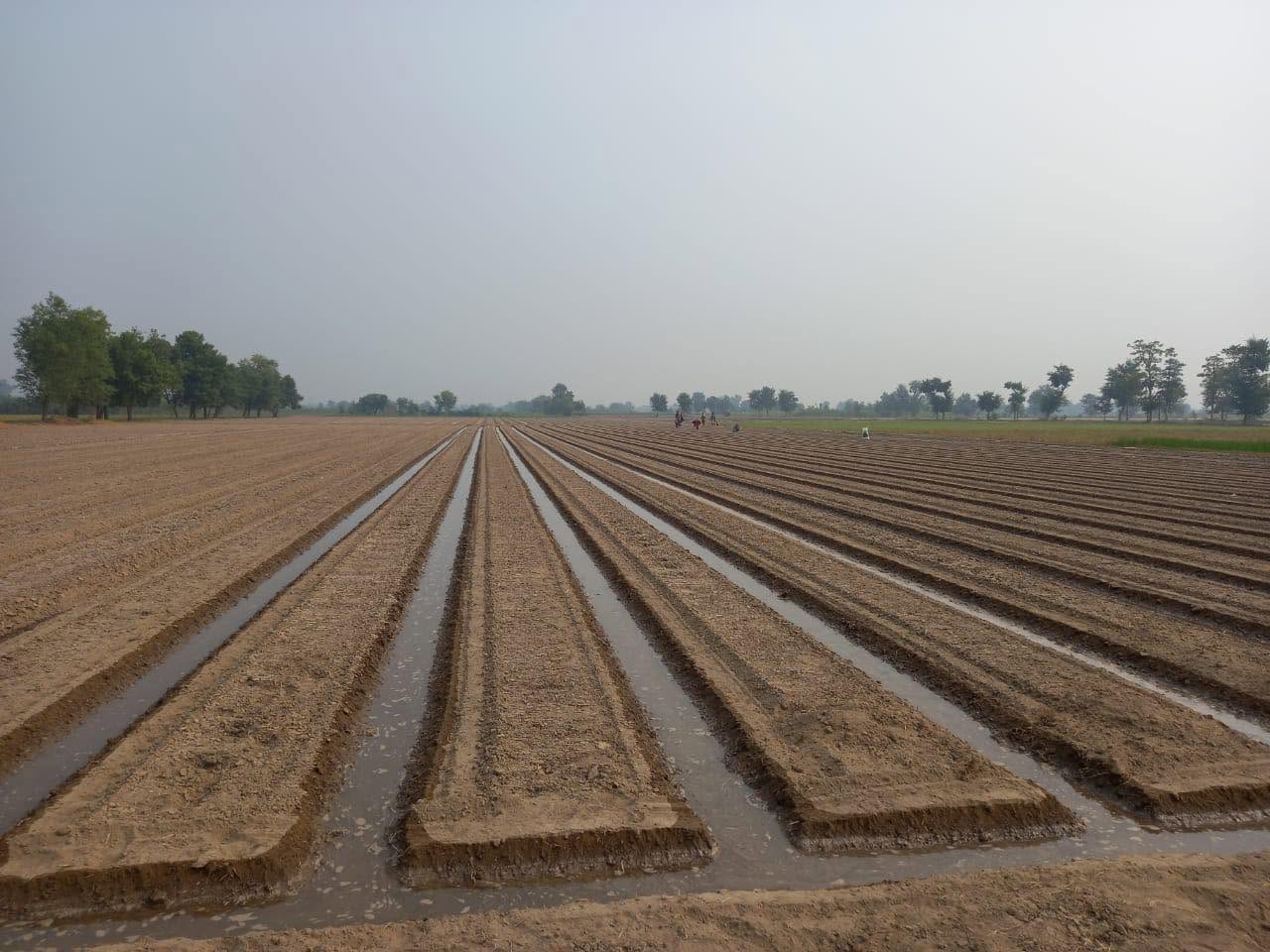
This paper details the precise trapezoidal geometry, 42-inch top width and 8-inch height, and dual-zone irrigation strategy behind PQNK raised beds, showing how the system intentionally separates a lateral 'hydraulic' water reservoir from a central 'nutrient-aeration' zone so plants can draw independently on each as needed.
Abstract
The paper's executive summary describes PQNK's raised beds as moving beyond uniform soil irrigation by intentionally engineering distinct moisture and aeration zones within the same bed. The core innovation is a central dense nutrient-aeration zone paired with lateral water absorption zones, letting plants self-regulate their uptake of water versus dense nutrient solution according to physiological need, rather than facing a single, compromised root environment.
This is framed as designing a heterogeneous rhizosphere that mimics beneficial natural structures through specific bed geometry, controlled irrigation technique, and managed compaction, eliminating the typical trade-off between waterlogging and drought stress. The bed's precise architectural specification is given as: 42-inch top width, 52-inch bottom width, 18-inch furrow top width, 8-inch furrow bottom width, and 8 inches of bed-to-furrow height, a trapezoidal shape that defines both the growing surface and the water-movement pathways.
The lateral hydraulic absorption zone occupies roughly the outer third of each bed side, adjacent to the furrow. Irrigation delivered slowly via 2-inch syphon tubes, combined with the natural compaction of the furrow bottom from repeated foot and machinery traffic, reduces vertical percolation and encourages horizontal seepage into the bed sides; this zone functions as the plant's primary water reservoir for transpirational cooling, and irrigation is deliberately stopped once the mulch shows only minimal darkening, preserving the distinction from the drier center. The central dense nutrient and aeration zone, shielded from direct lateral seepage, stays at lower moisture but higher nutrient concentration and preserved porosity, serving as the plant's powerhouse for nutrient uptake and root respiration.
The paper describes the plant-root relationship as self-regulating: roots forage the central zone for concentrated nutrients and oxygen as primary nutrition, while drawing on the lateral zones specifically when extra water is needed for transpirational cooling, letting the plant optimize each physiological process independently rather than compromising across a single environment.
On implementation, a standard acre (198 ft by 220 ft) is laser-leveled to zero slope and laid out as 40 beds along the 198-foot side, promoting deep infiltration of rainwater exactly where it falls. Two adjoining beds are allocated to perennial orchard crops (with tubers prohibited to avoid disturbance), and three beds are reserved for rotating annual crops planted through mulch via VIPP, SIPP, or hand dribbler. Notably, the paper states no external nitrogen-fixing cover crops like cowpea are recommended, since the soil is considered rich enough in mineral nitrogen and native microbial fixation to meet the crop's needs without them.
Key Takeaways
- PQNK raised beds follow a precise trapezoidal spec: 42-inch top width, 52-inch bottom width, 18-inch furrow top, 8-inch furrow bottom, and 8-inch bed height.
- The system deliberately engineers two distinct root-zone environments: lateral hydraulic zones near the furrow (a diluted, readily available water reservoir) and a central dense nutrient-aeration zone (a concentrated, oxygen-rich nutrient source).
- Furrow bottoms are intentionally compacted by foot and machinery traffic to reduce vertical percolation and push irrigation water sideways into the bed.
- Irrigation is deliberately stopped once mulch shows only minimal darkening, preserving the distinction between the two zones rather than saturating the whole bed.
- A standard acre (198ft x 220ft) is laser-leveled to zero slope and laid out as 40 beds, with two adjoining beds reserved for perennial orchard crops and three for rotating annual crops.
- No external nitrogen-fixing cover crops like cowpea are used; the system relies on native soil microbes and mineral nitrogen already present in the soil.