

Crop-Specific Guides
Watermelon Cultivation: Pruning, Irrigation, and Trellis Q&A
A farmer's detailed field questions on watermelon pruning ratios, shading with corn, trellis design, plant spacing, and irrigation timing, answered against PQNK's water-mineral and moisture-gradient principles.
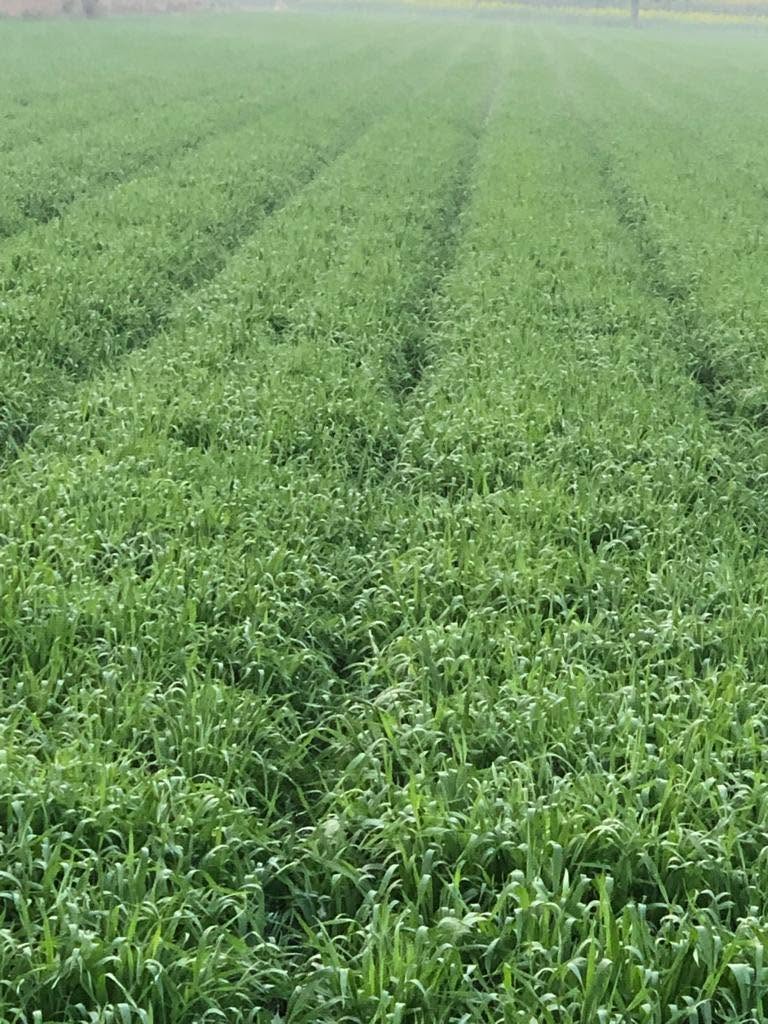
Abstract
The exchange opens on pruning geometry: the main stem is topped at 9 inches, and the first branch is likewise pruned at 9 inches to allow 3-4 sub-branches, with one fruit retained per branch to produce uniform size, colour, and sweetness. The 9-inch figure is presented not as a fixed rule but as a working distance, and male flowers are left alone rather than pinched, since they shed naturally once pollination completes and good pruning already reduces their number.
On nutrition, the answer reframes irrigation itself as a mineral-delivery question rather than a volume question: over-irrigation dilutes the soil's water-mineral solution, pushes the plant toward vegetative growth in search of missing minerals, and produces the diluted, low-flavour fruit the response calls 'Phokki,' comparable to a broiler chicken raised on a similarly imbalanced input regime. The stated target ratio for a properly functioning system is roughly 95 percent of plant mass from the atmosphere and 5 percent trace minerals from the soil.
Shade, trellising, and density questions are handled concretely: corn is recommended at roughly 30 percent of the planting, spaced 2 feet apart on the sun-facing side of the bed to shade watermelon in the afternoon; trellis spacing runs 24 inches for horizontal growth and 12 inches for vertical, with vertical trellis production estimated at four times the horizontal yield per given area; and furrow width for tractor-less trellis operations is set at approximately 13 inches.
Irrigation guidance follows the PQNK principle that water is a nutrient carrier and evaporative coolant, not a variable to be increased or decreased independently of plant demand: watermelon, described as a desert plant with minimal water needs, may require no irrigation at all on a well-matured PQNK bed. Visible wilting can prompt a grower to go check the soil, exactly as with any other crop, but it is the root-zone ball test that determines whether irrigation is actually warranted.
About This Paper
- Crop
- Watermelon · Maize (Corn)
- Problem
- Weak Flavor / Aroma / Quality Sensory Markers · Over-Irrigation · Heat Stress on Crop · Space / Infrastructure Constraint
- Science
- Water · Nutrition · Production Architecture
- Evidence
- Farmer Testimony
- Authority
- Current / Approved PQNK Knowledge
Related PQNK Science
Key Takeaways
- Main stem and first branch are pruned at 9 inches, retaining one fruit per branch for uniform size, colour, and sweetness; male flowers are left to shed naturally rather than removed.
- Over-irrigation dilutes the soil's water-mineral solution and drives vegetative growth at the expense of fruit mineral density, producing tasteless ('Phokki') fruit.
- Corn planted at roughly 30 percent of the bed area, 2 feet apart on the sun-facing side, provides afternoon shade for watermelon vines.
- Trellis spacing is 24 inches horizontal versus 12 inches vertical, with vertical trellis production estimated at four times horizontal yield for the same area.
- Watermelon is treated as a desert plant with minimal water demand; on a well-matured PQNK bed it may need no supplemental irrigation. Wilting can prompt a soil check, but it is the root-zone ball test, not the wilting itself, that determines whether watering is actually warranted.
- Fruit should be harvested early morning when field temperature is lowest, ideally with field heat removed by a chilled-water dip, to maximize post-harvest freshness.
Related Crops
Related Knowledge
Companion paper
Watermelon Cultivation Under the Paedar Qudratti Nizam Kashatqari (PQNK): A Guideline Based on Practical Field Observations
PQNK watermelon takes 90-100 days to mature instead of 70 under chemical systems, not a delay but evidence of the plant building a real root-microbiome partnership first. This guideline works through frost protection, vine training, tip-cutting after fruit set, shade-based shrinkage prevention, and a cold-water field-heat removal protocol that holds fruit quality for 10-14 days.
same problem
PQNK (Pristine Organic Farming) Guide to Wheat Cultivation
A practical farmer Q&A covering seed preparation, an intercropped bed layout combining wheat with corn (for shade), peas, and radish, a three-stage pruning schedule tracked by tiller counts, and irrigation and harvest timing, distinct from PQNK's economics- and lifespan-focused wheat papers in that it is a field-operations manual for bed design and day-to-day management.
same problem
PQNK Advisory Paper: Tomato (Solanum lycopersicum)
Tomato is naturally perennial in its tropical highland origin, and this advisory shows how PQNK's stable microclimate, mulch, living companion canopy, and a low-dose ethanol spray, can restore that perennial behavior in open-field cultivation, alongside a full sucker-pruning and harvest protocol.
same problem
The PQNK Kitchen Garden: A Regenerative Ecosystem for Household Abundance and Sovereignty
A compact guidebook applying PQNK principles to household-scale food production, showing how a single 4-foot by 20-foot bed, planned like a household budget around daily, weekly, and seasonal produce needs, can supply the bulk of fresh vegetables for a family of ten, with a parallel rooftop/container method built around a novel underground 'soil life conduit.'